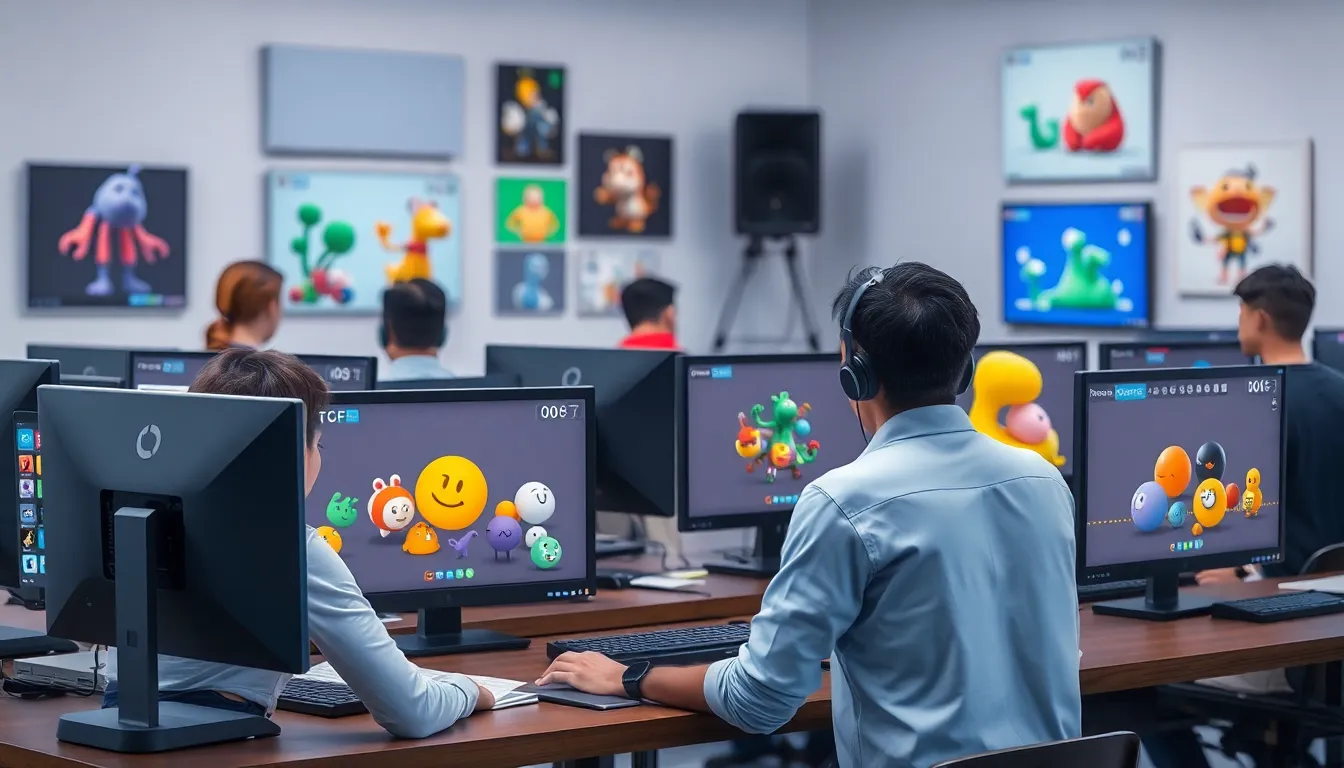
Blender animations are the secret sauce behind some of the most captivating visuals in the digital world. Whether it’s a quirky character busting a move or a stunning landscape that makes you question reality, Blender’s powerful tools can bring any idea to life. And let’s be honest, who wouldn’t want to create their own animated masterpiece that could make Pixar green with envy?
Blender Animations
Blender animations utilize the robust features of Blender software to create dynamic visual experiences. Users can animate characters, objects, and environments, resulting in captivating storytelling through animations. Key features include rigging, which involves creating skeletons for characters, and keyframing, a technique that defines critical moments in animations.
With its state-of-the-art rendering engine, Blender produces high-quality outputs. The software supports various animation styles, such as 2D animation, 3D animation, and motion graphics. Each style offers distinct advantages, catering to different artistic visions. Users can choose specific animation techniques based on their project requirements.
Animation workflows within Blender begin with modeling. This process involves designing 3D objects and characters in detail. Following modeling, users apply textures and materials to enhance visual appeal. Finally, animations come to life through the use of Blender’s powerful animation tools, allowing for smooth transitions and realistic movements.
Furthermore, Blender’s timeline feature offers precise control over animation timing. Users can adjust and fine-tune movements to achieve the desired effect. Additionally, the software includes various export options, enabling users to share their work across multiple platforms.
Numerous tutorials and community resources enhance the learning experience for new users. Participation in forums and online groups can provide valuable feedback and support. Dedicated users often share tips and tricks to optimize workflows, helping others level up their animation skills in Blender.
Key Features of Blender
Blender offers a range of impressive features that enhance animation creation, catering to various skill levels and artistic preferences.
User-Friendly Interface
Blender’s interface prioritizes accessibility and efficiency. Navigating through different tools remains intuitive, even for beginners. Customization options allow users to tailor layouts according to their workflow. Tabs and panels facilitate quick access to essential features, enhancing productivity. The presence of tooltips helps identify functions, reducing the learning curve. Users can switch between 2D and 3D modes seamlessly, promoting flexibility in animation projects.
Comprehensive Toolset
Blender provides an extensive set of tools designed for diverse animation styles. Rigging capabilities enable the creation of complex skeletal structures for characters. Keyframing simplifies the process of defining movement across timelines. Advanced sculpting tools let users refine details on models, ensuring realism. The rendering engine supports high-quality output, making animations visually stunning. Additionally, particle systems and physics simulations create dynamic interactions within scenes, enriching the animation experience. Users benefit from a broad range of add-ons that extend functionality further, allowing for specialized tasks.
Types of Animations in Blender
Blender offers diverse animation types, catering to various creative needs and artistic styles. Users can explore both 2D and 3D animations to realize their imaginative visions.
2D Animations
2D animations in Blender often involve drawing and manipulating flat images. Using Grease Pencil, artists create hand-drawn effects directly within the 3D space. Keyframing brings drawings to life, allowing for smooth transitions and intricate movements. This method supports frame-by-frame animation, ensuring complete control over each element. Blending traditional techniques with digital advantages, it enhances storytelling and visual appeal. Many creators enjoy the flexibility of combining 2D elements with 3D scenes, producing captivating hybrid animations.
3D Animations
3D animations leverage Blender’s powerful modeling tools to create lifelike characters and environments. Users design models that can be rigged, allowing for articulate movement. The keyframing feature is essential for establishing timing and fluidity in animations. Physical simulations add an additional layer, making movements dynamic and realistic. Light and texture integration enhances depth and realism in scenes. Artists can render animations in stunning detail, ensuring high-quality outputs for various media formats. The seamless workflow facilitates iterative tweaks throughout the animation process, supporting creative exploration and refinement.
Techniques for Creating Stunning Animations
Blender offers various techniques to craft stunning animations that capture viewers’ attention. Key strategies include effective rigging and understanding animation principles.
Rigging and Skinning
Rigging involves creating a skeletal structure for characters or objects. This process allows for dynamic movement and expression, making animations come alive. Skinning follows, attaching the character mesh to the rig, ensuring the model deforms realistically when animated. Users can adjust weight painting to fine-tune how different parts of the mesh respond to movements. By mastering rigging and skinning, animators enhance character believability and facilitate smoother animations.
Animation Principles
Understanding animation principles enhances the storytelling aspect of animations. Key principles include timing, spacing, and squash and stretch, which contribute to fluid motion. Effective use of these principles creates anticipation and satisfaction in the audience. For example, exaggerated movements evoke emotion, while naturalistic actions foster authenticity. Animators can emphasize arcs in motion to create more organic movements. By applying these foundational principles effectively, creators elevate their animations to a higher standard.
Common Challenges and Solutions
Blender animators often face various challenges during their creative process. Learning curves can be steep for beginners due to the complexity of the software. Breaking down tasks into manageable steps simplifies navigation and enhances user confidence.
Another common issue is rigging characters correctly. Rigging can lead to frustrating results if not done properly, but utilizing online resources and tutorials provides insight and best practices. Following clear examples improves rigging outcomes and streamlines the animation workflow.
Animation timing also poses challenges, as achieving fluid motion is crucial for storytelling. Timing should prioritize keyframes and spacing to convey emotion effectively. Using the graph editor helps fine-tune animation curves, resulting in smoother transitions between movements.
Textures and materials may also cause headaches for users. Achieving realistic appearances requires an understanding of material properties and lighting effects. Experimenting with different shaders highlights how materials interact with light, enhancing overall visual quality.
Performance issues can arise, particularly with complex scenes and high polygon counts. Optimizing models by reducing unnecessary geometry and using instances for repeated elements alleviates strain on system resources. Taking advantage of Blender’s built-in optimization tools ensures smoother playback and quicker rendering times.
Collaboration often presents a challenge for teams working on complex projects. Establishing clear communication and utilizing version control systems coordinates efforts effectively. Implementing a shared asset library streamlines workflows and prevents duplication of efforts.
Finally, overcoming creative blocks is essential for animators. Seeking inspiration from various sources such as films and art can spark new ideas. Regular practice and exploring new techniques keep skills sharp and foster creativity in every project.
Conclusion
Blender animations offer a world of creativity and innovation for artists and storytellers. With its powerful tools and user-friendly interface, anyone can embark on an animation journey that transforms ideas into stunning visuals. The ability to blend 2D and 3D techniques opens up endless possibilities for unique storytelling.
As users dive into the intricacies of rigging and animation principles, they’ll discover ways to enhance their work and overcome challenges. The supportive community and abundant resources available make it easier than ever to refine skills and push creative boundaries. Embracing the art of animation in Blender not only inspires personal growth but also contributes to a vibrant digital landscape.