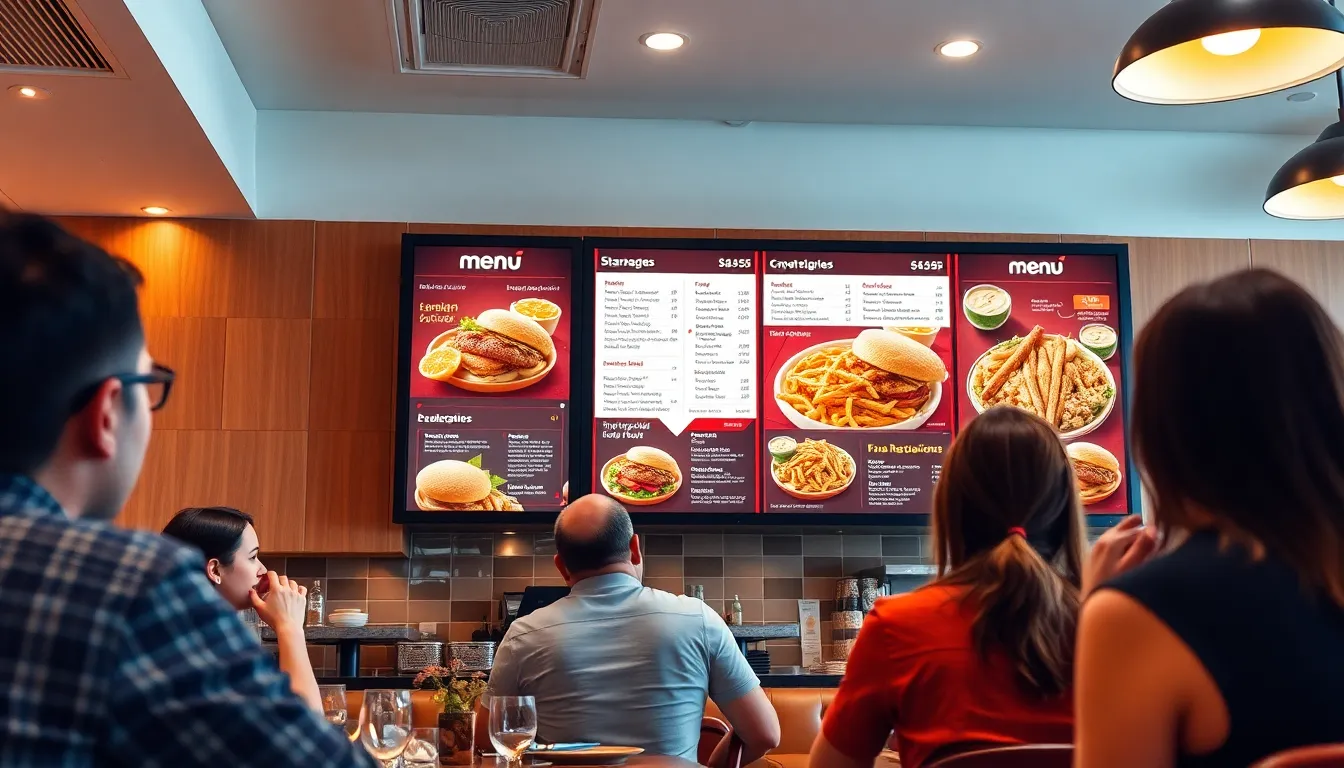
In a world where attention spans are shorter than a TikTok video, digital menu boards are the superheroes every restaurant needs. They don’t just display food items; they create an experience that can make even the most indecisive diner feel like a culinary genius. Imagine a vibrant, eye-catching display that not only showcases mouthwatering dishes but also updates in real-time to reflect specials or seasonal items.
Digital Menu Board Design
Digital menu board design incorporates vibrant visuals and strategic layouts to captivate customers and improve their ordering experience. A well-designed board emphasizes font choice, color schemes, and visual hierarchy, guiding attention to featured items effectively.
Using high-resolution images can showcase dishes appealingly, creating an inviting atmosphere. Integrating animations and transitions enhances engagement, making menus feel dynamic and current. Flexibility in design allows for seasonal themes, promotional content, and special offers to be easily incorporated.
Effective content organization is crucial. Grouping items into clear categories aids navigation. Clear labeling of prices and descriptions helps customers make informed decisions quickly.
Responsive layouts that adjust to various screen sizes support user experience across devices. Integration of updated nutritional information enriches customer engagement, addressing growing health consciousness.
Digital menu boards also offer real-time updates. Modifying content to reflect item availability or limited-time offers happens instantly, ensuring customers receive up-to-date information. Utilizing advanced software enables remote management, allowing owners to control displays from any location.
Incorporating branding elements deepens recognition and promotes loyalty. Consistent use of logos, colors, and taglines reinforces brand identity, enhancing visibility within a competitive market.
User-friendly interfaces simplify operations for staff and management alike. Training staff on utilizing the boards ensures seamless integration into daily operations. When designed effectively, digital menu boards transform the dining experience, making it modern, enjoyable, and efficient.
Benefits of Digital Menu Boards
Digital menu boards provide numerous advantages for restaurants, significantly enhancing the overall dining experience. These boards improve engagement, streamline operations, and foster customer satisfaction.
Enhanced Visual Appeal
Digital menu boards captivate customers with vibrant visuals that attract attention. High-resolution images of food items make them more appealing. Stunning animations guide diners toward featured offerings, showcasing limited-time promotions or specialties. Color schemes complement branding while maintaining readability, ensuring that important information stands out. Effective layouts strategically position items to optimize customer focus. The overall design creates an inviting atmosphere that can enhance appetite and encourage impulse purchases.
Improved Customer Experience
Customer experience improves with the use of digital menu boards, offering dynamic content that addresses individual preferences. Real-time updates on menu items keep information current, preventing frustration over unavailable dishes. Clear categorization and labeling aid navigation, helping diners make quicker decisions. Interactive features encourage exploration, particularly for indecisive customers. A user-friendly interface simplifies order placement, enhancing overall efficiency. Integration of nutritional information caters to health-conscious diners, providing transparency while supporting informed choices.
Key Design Elements
Effective design elements contribute significantly to the impact of digital menu boards. Typography, color schemes, and layout all play vital roles in engaging customers.
Typography and Font Choice
Font choice directly influences readability and customer perception. Use clear, legible fonts that reflect the restaurant’s brand personality. Sans-serif fonts often enhance clarity, especially on digital displays. Displaying item names prominently draws attention to featured offerings. Consider varying font sizes to create a visual hierarchy that guides customers through the menu efficiently. Consistency in font usage maintains a professional appearance, making the board easy to navigate.
Color Schemes and Branding
Color schemes evoke emotions and reinforce branding. Choose colors that align with the restaurant’s theme, creating a cohesive look that enhances brand recognition. Contrasting colors improve legibility while catching customer attention. Utilizing brand colors establishes familiarity and loyalty among diners. Seasonal or promotional colors can add excitement and encourage impulse purchases. Ensure consistency across all marketing materials for a unified brand presence.
Layout and Organization
Layout significantly affects navigation and decision-making. Group menu items into logical categories for easy access. Prioritizing featured items through strategic placement attracts quick attention. Clear labeling and concise descriptions support informed choices. Ensure content adapts to different screen sizes for a consistent experience. Visual flow matters; guiding customers’ eyes from the top to the bottom can facilitate a smoother ordering process. Effective organization streamlines customer interactions, enhancing overall satisfaction.
Best Practices in Digital Menu Board Design
Effective digital menu boards enhance the dining experience, requiring attention to several best practices for optimal design.
Content Management
Content management plays a crucial role in ensuring relevant updates and presentations. Organizing menu items into clear categories allows diners to navigate effortlessly. Regularly reviewed content ensures accuracy regarding pricing or seasonal offerings. Utilizing user-friendly software facilitates quick updates, keeping items current. High-quality images capture attention, while concise descriptions enhance appeal. Staff training on content management systems improves efficiency, ensuring the board reflects the latest changes.
Dynamic Content and Updates
Dynamic content keeps menus fresh and engaging. Real-time updates maintain customer interest by displaying specials or limited-time offerings. Interactive features, such as touch-screen capabilities, allow diners to explore customized meal combinations. Displaying nutritional information caters to health-conscious customers, encouraging them to make informed choices. Seasonal themes and promotional graphics create excitement, fostering repeat visits. Offering unique visuals, like animated images or videos, enhances the overall viewing experience, driving increased sales.
Conclusion
Digital menu boards are revolutionizing the way restaurants engage with customers. Their ability to deliver real-time updates and dynamic content not only enhances the dining experience but also drives customer satisfaction. By focusing on effective design elements such as typography, color schemes, and layout, restaurants can create an inviting atmosphere that encourages diners to explore their offerings.
Moreover, the integration of user-friendly software and clear content organization simplifies operations for staff while improving navigation for patrons. As the restaurant industry continues to evolve, embracing digital menu boards will undoubtedly play a crucial role in attracting and retaining customers, ultimately leading to increased sales and loyalty.