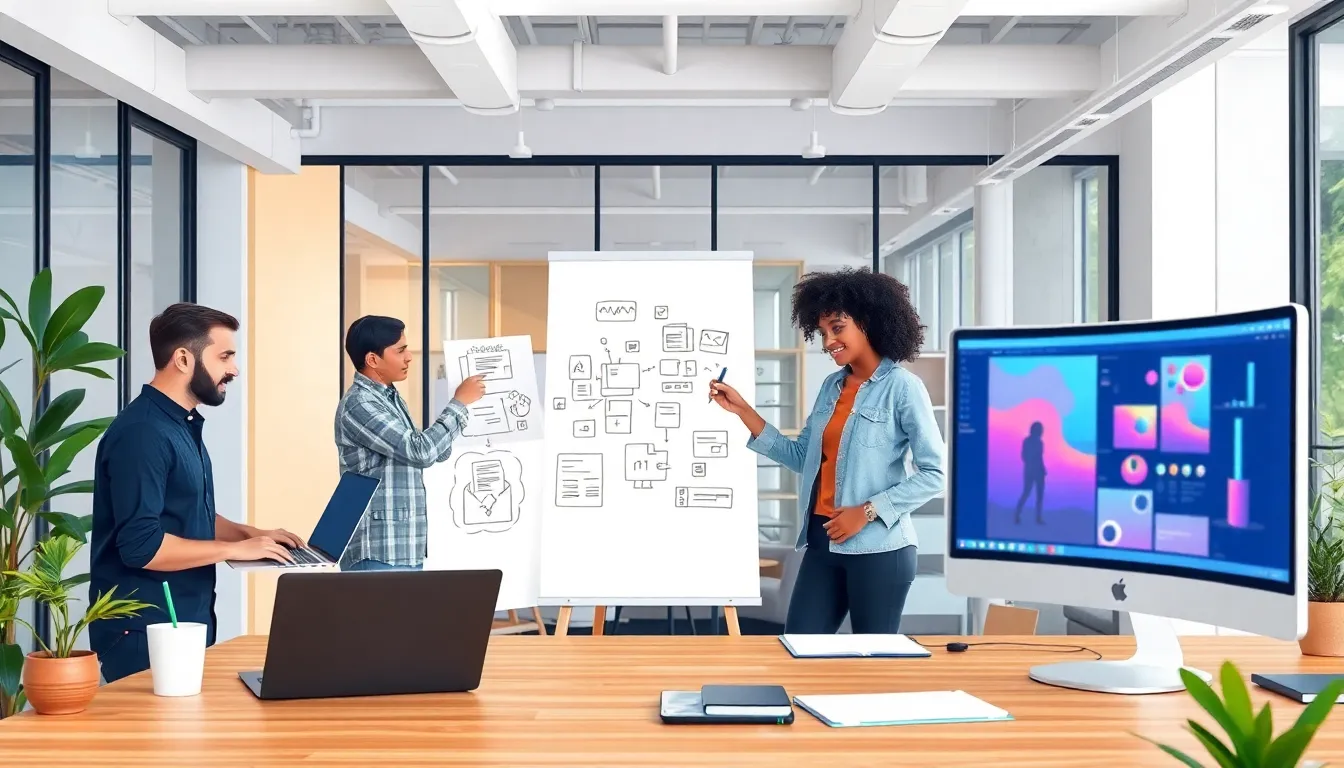
In a world where creativity meets technology, digital design careers are the new rock stars. Forget the days of boring 9-to-5 jobs; now, designers are crafting stunning visuals that make brands shine brighter than a diamond in a goat’s butt. Whether it’s web design, graphic design, or UX/UI, there’s a digital design role that fits every creative soul.
Digital Design Careers
Digital design careers encompass a range of roles that integrate creativity with technology. Positions like web designer, graphic designer, and UX/UI designer lead the industry, reflecting the high demand for visually appealing and user-friendly designs. Each role plays a unique part in enhancing brand visibility and user experience.
Web designers focus on creating functional, visually appealing websites. These professionals use skills in coding and aesthetics to generate engaging online experiences. Graphic designers concentrate on visual communication, crafting images and graphics for print and digital media. They translate ideas into captivating visuals that resonate with audiences.
UX/UI designers specialize in user experience and interface design. Their work involves understanding user behavior and creating intuitive designs that enhance usability. By streamlining navigation and improving interaction, they significantly impact how users perceive brands.
Employment opportunities for digital design roles vary across industries, ranging from tech companies to marketing agencies. Many professionals find freelance options appealing due to the flexibility they provide. Remote work opportunities expand even further, allowing for a broader talent pool and diverse project experiences.
Education in digital design often includes degrees in graphic design, web development, or related fields. Professional certificates also enhance marketability and expertise. Keeping up with industry trends and mastering design software plays a crucial role in career advancement.
Digital design careers offer vibrant pathways for creative individuals. The integration of artistic skills with technological proficiency leads to exciting and rewarding job prospects. As businesses increasingly recognize the importance of strong design, the demand for skilled digital designers continues to grow.
Types Of Digital Design Careers
Digital design encompasses a variety of exciting career paths, each with unique specializations and opportunities.
Graphic Design
Graphic designers create visual content that communicates messages through images and typography. They produce materials for print and digital media, such as logos, brochures, and social media graphics. Many graphic designers utilize software like Adobe Creative Suite to develop their work. Creativity and the ability to understand client needs are essential traits for success in this role. Professionals often collaborate with marketing teams to ensure designs align with brand strategies. Employment spans various fields, including advertising, publishing, and branding agencies.
User Experience Design
User experience designers focus on enhancing user interactions with products and services. They analyze user behavior to create intuitive interfaces that improve satisfaction. Researching and testing usability plays a crucial role in their process. Professionals commonly utilize wireframes and prototypes to visualize their designs before implementation. Strong analytical skills and empathy for users greatly assist them in understanding needs. Industries actively seeking UX designers include tech, e-commerce, and entertainment.
Motion Graphics Design
Motion graphics designers bring visual elements to life through animation. They create engaging videos, advertisements, and visual effects for a range of platforms. Software like After Effects and Cinema 4D is often used to develop dynamic animations. The ability to combine creativity with technical skills is vital in this field. Projects can vary from short promotional clips to long-form videos. Demand for motion graphics designers continues to rise as video content becomes increasingly popular across digital channels.
Web Design
Web designers build and maintain visually appealing and functional websites. They ensure sites are user-friendly while meeting aesthetic and technical requirements. Knowledge of HTML, CSS, and JavaScript is often essential. Collaboration with developers and content creators enhances the overall design process. Designers must stay updated with current trends and best practices to ensure audience engagement. Opportunities in web design exist across numerous industries, including e-commerce, education, and non-profits.
Skills Required For Digital Design Careers
Digital design careers demand a blend of technical and soft skills to excel in a competitive landscape. Mastery of these skills enhances a designer’s ability to create impactful and effective designs.
Technical Skills
Proficiency in design software like Adobe Creative Suite sets a strong foundation. Knowledge of coding languages, such as HTML, CSS, and JavaScript, enriches a designer’s capability to develop interactive and user-friendly websites. Familiarity with UX research methods is critical for understanding user needs. Designers also benefit from skills in prototyping tools like Sketch or Figma. An understanding of responsive design principles ensures adaptability for various devices. Each of these technical skills directly influences a designer’s effectiveness in their role.
Soft Skills
Creativity remains essential for generating innovative design solutions. Strong communication abilities enable designers to articulate concepts to clients and team members. Adaptability allows quick adjustments to changing project requirements. Collaboration fosters productive relationships with developers, marketers, and other stakeholders. Critical thinking aids in solving design challenges and improving user experiences. Each of these soft skills plays a significant role in a designer’s success within their career.
The Future Of Digital Design Careers
Digital design careers are evolving rapidly as technology advances. Emerging roles consistently appear, driven by innovations in artificial intelligence, augmented reality, and interactive media. Skills in UX/UI design become even more essential as user-centered approaches gain traction across industries.
Remote work opportunities allow professionals to engage with global clients and projects. This flexibility reshapes how designers collaborate and communicate. Engaging in online communities and forums helps digital designers network and share insights, enhancing their career prospects.
Education pathways are diversifying, with many institutions offering online courses and boot camps. Learning platforms develop resources that cater to various skill levels, making design education accessible. Staying abreast of design trends and software updates remains critical.
Several industries propel demand for digital designers, including healthcare, entertainment, and e-commerce. Organizations recognize the value of exceptional design in enhancing customer experiences and driving sales. Adaptability and continuous learning become vital traits as designers navigate an ever-changing landscape.
Creativity remains at the forefront, influencing design innovation. Projects increasingly prioritize visual storytelling, requiring designers to integrate captivating narratives into their work. The intersection of technology and art underscores the importance of interdisciplinary skills, bridging the gap between creative vision and technical execution.
As the job market for digital designers expands, professionals equipped with a blend of technical and soft skills stand to thrive. Mastering design software and coding languages is essential. Strong communication abilities and teamwork can elevate a designer’s contributions to projects, ultimately leading to career advancement. The future of digital design careers promises growth and opportunity for those ready to embrace change.