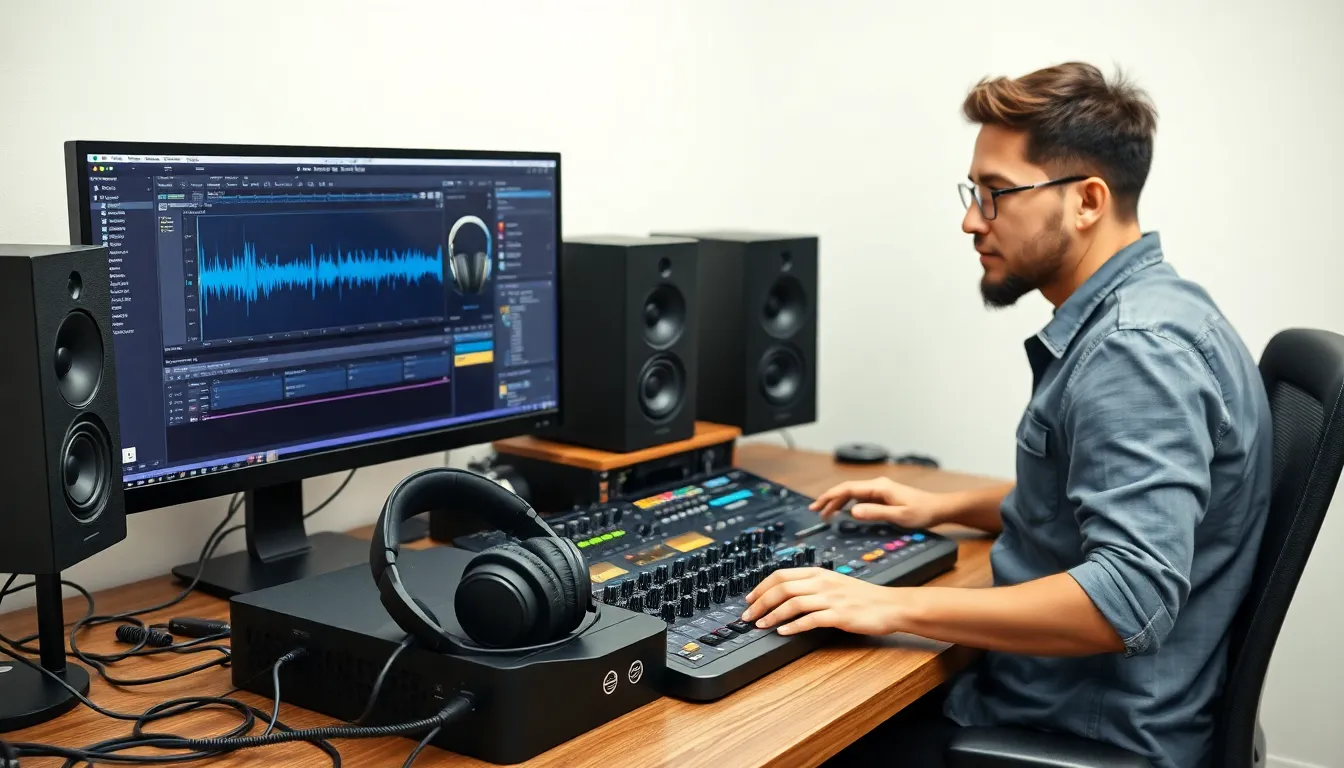
In a world where visuals grab attention, digital design audio sneaks in like a ninja, transforming mundane experiences into captivating adventures. Imagine browsing a website where every click is accompanied by a delightful sound, or watching a video that resonates with a perfectly crafted soundtrack. It’s not just background noise; it’s the secret ingredient that elevates digital content from “meh” to “wow!”
Digital Design Audio
Digital design audio plays a significant role in crafting immersive experiences for users. Sound can enhance engagement, making interactions more memorable. Designers utilize audio elements to evoke emotions or set a specific tone, enriching the overall aesthetic.
Presently, various formats and technologies deliver audio in design. MP3 files remain popular due to their balance of quality and file size. WAV files, while larger, offer superior sound fidelity, making them ideal for professional audio applications. Designers often consider the context before choosing a file format.
Interactive sound elements improve user interactions in applications and websites. Sounds trigger feedback, signifying actions like clicks or notifications. Effective use of sound effects can guide users seamlessly through tasks while maintaining interest.
Audio branding distinguishes companies within a crowded marketplace. Unique sounds or jingles create a lasting association in users’ minds. For instance, tech brands frequently employ short audio cues to affirm an action or reinforce their identity.
Accessibility in digital design audio ensures inclusivity for all users. Providing options for sound control, including volume adjustments and toggle options, caters to diverse preferences. Incorporating captions for audio content supports audiences with hearing impairments.
Finally, continuous innovation shapes the future of digital design audio. Advances in sound technology enhance realism in virtual environments. Artificial intelligence in sound design introduces personalized audio feedback, aligning sound experiences with individual user preferences.
Key Components Of Digital Design Audio
Digital design audio encompasses several key components that shape the auditory experience in the digital realm. These elements play a crucial role in crafting immersive audio experiences.
Digital Audio Workstations (DAWs)
Digital audio workstations serve as the primary tool for sound professionals. They facilitate recording, editing, and mixing audio tracks in a user-friendly environment. Popular DAWs like Ableton Live, Logic Pro, and Pro Tools offer unique features that cater to different audio production needs. These platforms enable seamless integration of MIDI and audio tracks. Users can also utilize built-in effects and instruments that enhance creativity within their projects.
Audio Interfaces
Audio interfaces act as crucial bridges between audio sources and computers. These devices convert analog signals into digital data, ensuring high-quality sound capture. Brands such as Focusrite and Presonus provide various models tailored for different production setups. Features like phantom power and multiple inputs enhance versatility, enabling recording of instruments and vocals simultaneously. When selecting an audio interface, compatibility with recording software is a critical consideration for optimal performance.
Plugins And Effects
Plugins and effects enrich audio productions with diverse soundscapes. These software components extend the functionality of DAWs by introducing virtual instruments and customizable sound effects. Reverb, delay, and EQ are common effects used to refine audio output. Companies like Waves and Native Instruments offer extensive libraries, catering to various audio preferences. Utilizing plugins allows designers to manipulate sound creatively, enhancing the overall listening experience.
Applications Of Digital Design Audio
Digital design audio finds application across various industries, enhancing experiences and creating engaging environments.
Music Production
Music production thrives on digital design audio, where software tools like DAWs enable artists to compose, edit, and mix tracks. Sound designers leverage plugins and effects to refine audio elements, creating unique sonic landscapes that resonate with listeners. Collaboration amongst musicians often occurs remotely through cloud-based platforms, streamlining project management and ensuring seamless integration of various audio sources. High-quality samples and loops contribute to rich compositions, making digital design audio essential in developing contemporary music genres.
Film And Game Soundtracks
Film and game soundtracks utilize digital design audio to evoke emotions and enhance storytelling. Sound effects and background scores immerse viewers and players in the narrative, elevating the overall experience. Technologies like spatial audio create a 3D sound environment, enriching the perception of action and adventure. Composers work closely with filmmakers and game developers, ensuring that audio elements align with visuals and narrative arcs. This collaboration results in a captivating combination of sound and imagery that leaves lasting impressions.
Podcasts And Broadcasting
Podcasts and broadcasting heavily rely on digital design audio to produce clear and compelling audio content. Hosts and producers use advanced recording equipment and editing software to enhance audio quality, ensuring listeners remain engaged. Incorporating sound effects, music beds, and transitions helps to maintain momentum and interest throughout episodes. Accessibility features, such as transcripts and adjustable audio settings, cater to diverse audiences, ensuring inclusivity in listening experiences. This focus on quality and engagement makes digital design audio pivotal in the podcasting and broadcasting landscape.
Challenges In Digital Design Audio
Digital design audio faces several challenges that impact its effectiveness. These challenges can hinder the creation of compelling auditory experiences.
Technical Limitations
Technical limitations often arise in digital audio design. Hardware and software performance issues can restrict audio quality. Limited processing power may lead to latency issues during playback. Additionally, inadequate audio interfaces can hinder sound capture and reproduction fidelity. Compression techniques can reduce the quality of audio files, affecting clarity and richness. Compatibility problems among different audio formats and devices further complicate the design process. Designers need to navigate these challenges carefully to ensure optimal audio experiences.
Creative Constraints
Creative constraints in digital audio design can stifle innovation. Often, specific guidelines dictate sound usage within projects. These guidelines may include brand tones or predetermined audio lengths, leaving minimal room for artistic expression. Focusing on user preferences can also limit creativity, as sound designers may prioritize familiar designs over unique ones. Balancing creativity with functionality often presents additional challenges. Understanding the audience’s desires and expectations remains paramount, yet it can restrict experimental approaches to sound design.
Future Trends In Digital Design Audio
Advancements in spatial audio technology provide users with immersive listening experiences. As sound becomes more three-dimensional, designers can create environments that adapt to user movements. Innovations in adaptive soundscapes also allow audio to change in response to user interactions, enhancing engagement.
The rise of artificial intelligence plays a pivotal role in shaping future audio design. AI-driven algorithms analyze user preferences, creating personalized audio experiences that resonate with individuals. Many apps now incorporate AI to suggest sound profiles based on user behavior, tailoring interactions for maximum enjoyment.
Collaboration tools facilitate connections among audio professionals across various sectors. Cloud-based platforms enable real-time collaboration on projects, streamlining workflows for musicians and sound designers alike. This trend fosters creativity while allowing designers to share resources easily.
Accessibility remains a key consideration in digital design audio. Emerging trends focus on creating audio solutions that cater to diverse audiences, such as those with hearing impairments. Enhanced captioning features and sound options promote inclusivity in all forms of digital content.
Sustainability in audio production is gaining attention as well. With increasing awareness of environmental issues, designers prioritize eco-friendly practices in audio design. Utilizing energy-efficient equipment and eco-conscious sourcing can reduce the carbon footprint of sound production.
Finally, cross-disciplinary integration of sound with fields like virtual reality and augmented reality is on the rise. Designers are exploring how audio can enhance user interactions in these spaces, creating a more immersive experience. This integration bridges the gap between digital audio and visual elements, resulting in comprehensive and engaging user experiences.
Conclusion
Digital design audio plays a vital role in shaping user experiences across various platforms. Its ability to transform interactions through sound not only captivates audiences but also enhances engagement in meaningful ways. As technology continues to evolve, the integration of innovative audio solutions will likely redefine how users connect with digital content.
The focus on accessibility and personalized experiences ensures that sound design remains inclusive and relevant. With advancements in spatial audio and AI-driven technologies, the future of digital design audio promises to be even more immersive and tailored to individual preferences. Embracing these trends will empower designers to create unforgettable auditory experiences that resonate with users long after their interaction ends.