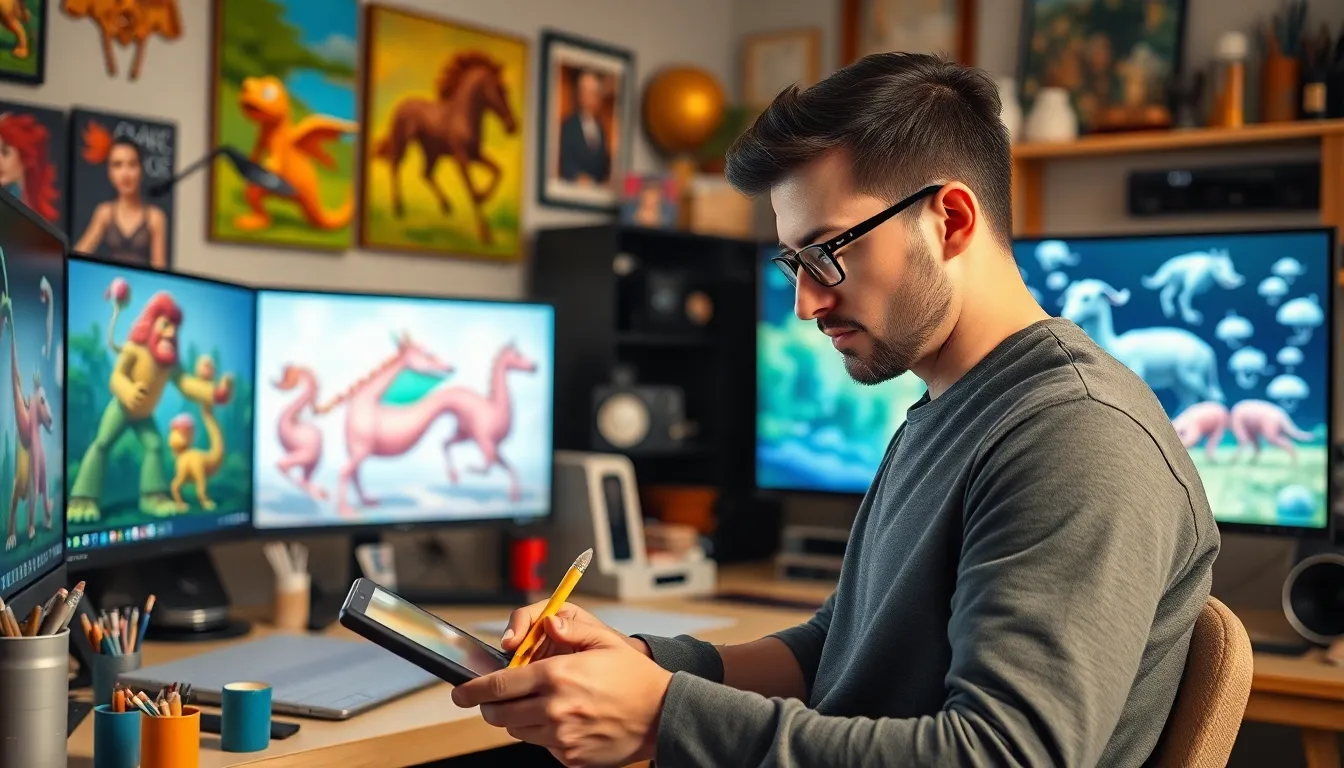
In a world where pixels reign supreme, digital art and design have transformed the way creativity flows. Gone are the days of messy paintbrushes and ink stains; now, artists wield tablets like wizards casting spells, conjuring breathtaking visuals with a mere swipe of a finger. It’s a realm where imagination knows no bounds, and the only limit is a computer’s processing power.
Whether it’s crafting eye-catching graphics or designing immersive experiences, digital art is the modern-day canvas that invites everyone to unleash their inner Picasso. With endless tools at their fingertips, creators are redefining what it means to be an artist. So grab your stylus, and let’s dive into the vibrant universe of digital art and design, where innovation meets inspiration, and every stroke tells a story.
Digital Art and Design
Digital art and design represent innovative methods of creative expression, leveraging technology in unprecedented ways. Artists utilize software like Adobe Photoshop and Illustrator, enabling limitless possibilities for artistic exploration. With tools ranging from tablets to digital canvases, creators achieve various styles and techniques, enhancing their ability to articulate visions.
Many designers combine traditional artistic skills with modern digital processes, creating a dynamic interplay. Digital illustrations often incorporate elements of photography, 3D modeling, and animation, showcasing versatility. Collaborations between artists and technologists result in interactive installations and immersive experiences, pushing the boundaries of creativity.
Skill development remains crucial in this evolving landscape. Artists frequently seek tutorials, workshops, and online courses to master new tools and techniques. Engagement with online communities fosters collaboration and exchange of ideas, enriching the creative process.
Market demand for digital art continues to grow, benefiting industries like advertising, gaming, and entertainment. Digital art serves not only as a reputable medium but also as a vital component in brand development and marketing strategies. Overall, the integration of technology into art and design opens new avenues for artistic innovation and entrepreneurship.
Key Techniques in Digital Art
Digital art encompasses various techniques that leverage technology for creative expression. Artists utilize diverse methods, allowing for unique visual outcomes.
Illustration and Painting
Digital illustration combines traditional painting techniques with modern software tools. Many artists employ programs like Adobe Illustrator and Procreate to create stunning visuals. Brushes and textures mimic real-world materials, enabling artists to achieve lifelike results. Layers facilitate complex compositions, while customizable features allow unique styles. Creating compelling characters and environments occurs with precision through vector and raster graphics. Digital painting expands artistic possibilities, as artists experiment with color theory and composition without the limitations of canvas and paint.
3D Modeling and Animation
3D modeling transforms conceptual designs into tangible forms. Artists use software like Blender and Maya to build intricate models with depth and realism. Rigging allows for character animation, providing movement to static designs. Texturing adds detail, enhancing the visual appeal and realism of models. Animation techniques bring stories to life, with frame-by-frame movement or keyframe animation. Industries such as gaming and film heavily rely on these techniques, increasing demand for skilled 3D artists. Digital advancements open new doors for creativity, making 3D art more dynamic and engaging than ever before.
Tools and Software
Digital art relies heavily on various tools and software that enhance the creative process. Different programs cater to specific artistic needs, allowing artists to explore a wide range of styles.
Popular Digital Art Software
Adobe Photoshop remains a leading choice for digital painting and photo editing. Its numerous features include customizable brushes and an extensive layer system. Procreate serves as a robust alternative for iPad users, offering a user-friendly interface and powerful tools. Corel Painter enables realistic painting experiences with its advanced brush engine. For 3D modeling and animation, Blender provides a comprehensive, open-source platform, while Autodesk Maya offers industry-standard tools for professionals. Each software serves distinct purposes, enabling artists to achieve their creative vision effectively.
Hardware Considerations
Selecting appropriate hardware is essential for maximizing digital art capabilities. A graphics tablet enhances precision, offering pressure sensitivity that mimics traditional drawing. Popular options include Wacom Intuos and Huion tablets, both known for their reliability. High-resolution monitors also significantly impact the creative process, providing accurate color representation. For those venturing into animation, a powerful computer with ample RAM and a high-performance GPU is necessary. These hardware components work together to facilitate a seamless creative workflow.
The Importance of Digital Design in Modern Media
Digital design plays a pivotal role in shaping modern media landscapes. As demand for visual content increases, effective digital design enhances communication and engagement across various platforms.
Branding and Marketing
Brand identity relies heavily on digital design. Companies utilize graphics that resonate with target audiences, fostering brand recognition and loyalty. Effective logos and color schemes establish memorable impressions, helping brands stand out in crowded markets. Digital advertising campaigns leverage captivating visuals to convey messages quickly and persuasively. For instance, social media graphics provide instant access to promotions and product launches, making digital design essential for brand success.
User Experience and Interface Design
User experience (UX) design focuses on creating seamless interactions. Designers prioritize usability by developing intuitive navigation and visually appealing interfaces. Enhancing user experience often leads to increased customer satisfaction and retention. For example, websites with clear layouts and quick loading times keep users engaged. Additionally, mobile applications rely on effective interface design to facilitate easy access to services, driving downloads and positive reviews. Engaging digital design ultimately contributes to a more enjoyable user journey in digital environments.
Conclusion
Digital art and design continue to reshape the creative landscape. As technology advances artists find new ways to express their vision and connect with audiences. The blend of traditional techniques with modern tools creates a rich tapestry of artistic possibilities that inspires innovation.
With the increasing demand for digital content across various industries the importance of honing skills and embracing new technologies cannot be overstated. Artists and designers have the opportunity to push boundaries and explore new mediums fostering a culture of creativity that thrives on collaboration and experimentation.
As they navigate this dynamic field it’s essential for creators to stay informed and engaged with the latest trends. The world of digital art and design is vibrant and full of potential inviting everyone to explore their artistic journey.