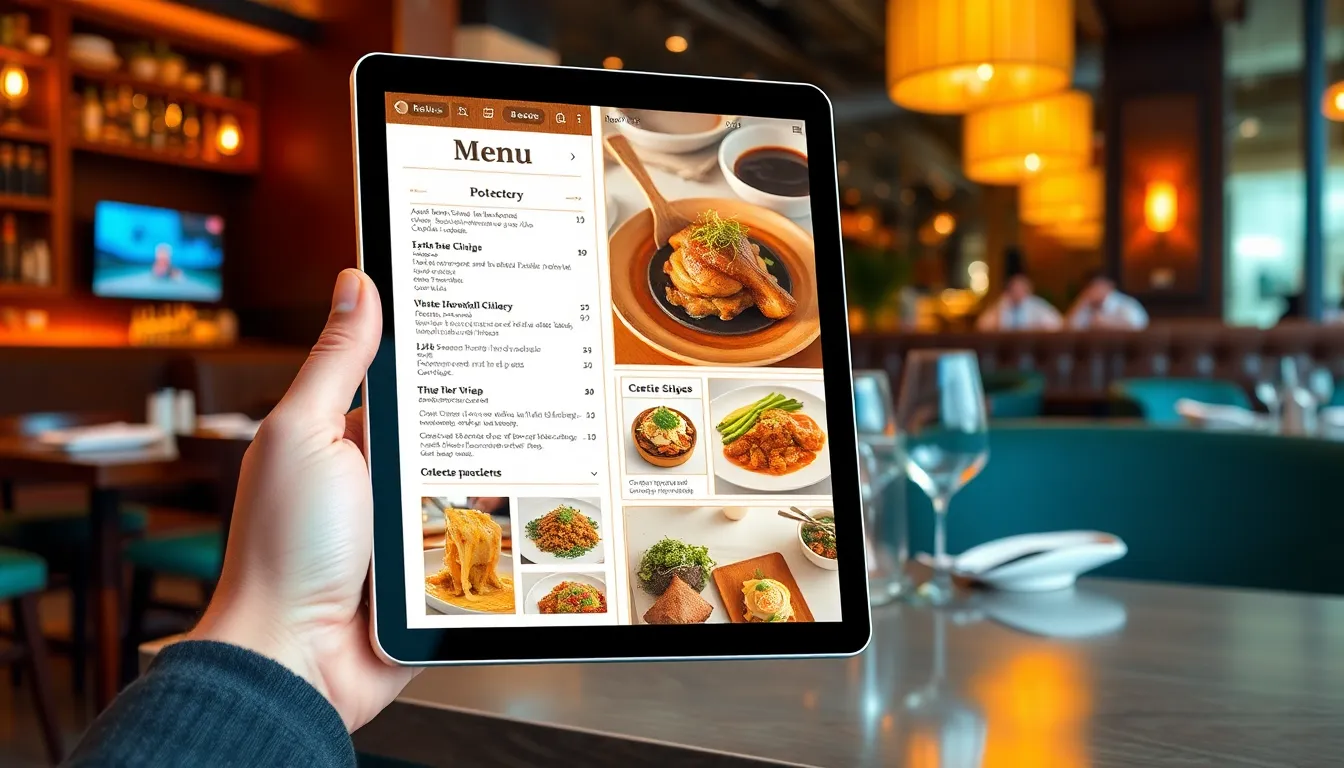
In a world where attention spans are shorter than a TikTok video, digital menu design has become the secret sauce for restaurants looking to stand out. Gone are the days of dusty paper menus that blend into the background. Today’s diners crave an experience that’s as appetizing as the food itself. With a well-crafted digital menu, restaurants can not only showcase their culinary masterpieces but also engage customers in a way that makes them want to order everything on the list.
Digital Menu Design
Digital menu design has transformed how restaurants present their offerings. This evolution enhances customer engagement and streamlines the ordering process. Various platforms enable restaurants to display menus on tablets, smartphones, and large screens, creating an immersive experience.
The design focuses on visual appeal and usability. Effective layouts attract attention and guide diners through selections. Color schemes, typography, and imagery play critical roles in evoking emotions and stimulating appetite. Restaurants increasingly utilize high-quality images that showcase dishes, illustrating what customers can expect.
User experience ranks high in digital menu design. Intuitive navigation helps diners locate items easily. Incorporating search functionality and filters improves accessibility, catering to diverse preferences and dietary restrictions. Feedback mechanisms allow customers to rate meals and suggest improvements.
Data analytics enrich decision-making for restaurant operators. Menu designers analyze customer behavior and ordering patterns to refine offerings. Successful restaurants tailor their menus based on seasonal trends, popularity, and profit margins.
Integrating multimedia elements elevates digital menus. Videos and animations capture attention and inform patrons about ingredients and preparation methods. These elements create an engaging atmosphere that enhances the overall dining experience.
Adapting digital menus for various devices proves essential. Mobile-friendly designs ensure optimal viewing across smartphones and tablets. Tablets placed at tables offer convenience, allowing diners to browse without waiting for servers.
Ultimately, effective digital menu design combines aesthetic appeal with functionality. Restaurants harness technology to create memorable dining experiences that cater to modern consumer expectations. The ongoing influence of digital menus continues shaping the restaurant industry’s future.
Key Elements of Effective Digital Menus
Effective digital menus incorporate essential components that enhance user experience and engagement. Emphasizing both visual appeal and user navigation increases customer satisfaction and boosts sales.
Visual Appeal
Visual appeal captivates customers’ attention and stimulates their appetites. High-resolution images of dishes showcase culinary offerings more enticingly. Color schemes should align with the restaurant’s branding, creating a cohesive look. Typography affects readability; clear fonts at appropriate sizes ensure customers can easily absorb the information. Layout design plays a vital role; strategically placed sections guide customers through categories smoothly. Engaging multimedia, such as videos or animations, adds dynamic elements that enrich user experience. Effective visual design invites exploration and influences decision-making.
User Navigation
User navigation remains crucial for a seamless ordering process. Intuitive interfaces allow diners to quickly locate menu items. Categories should be logically organized, enabling fluid transitions between sections. Interactive features, like search functionality, enhance usability, helping customers find specific dishes more efficiently. Responsive design ensures compatibility across devices, whether on smartphones or tablets. Incorporating feedback options allows diners to rate their experiences, fostering a sense of engagement. Focus on user-friendly navigation ultimately enhances the overall experience and encourages repeat visits.
Benefits of Digital Menu Design
Digital menu design significantly transforms how restaurants engage with customers. Enhancing visuals and interactivity, these menus create a more appealing dining experience.
Enhanced Customer Experience
Digital menus offer an immersive experience that captivates diners. They present high-resolution images, which stimulate appetite and entice orders. User-friendly interfaces allow for easy navigation, ensuring quick access to menu options. Interactive elements, like touch screens, engage customers in menu exploration. Clear dietary information accommodates diverse preferences, making dining more inclusive. Giving customers instant feedback and options helps in making informed choices.
Increased Efficiency for Restaurants
Efficiency improves dramatically with digital menus in place. Streamlined ordering processes minimize wait times, allowing patrons to place orders rapidly. Real-time updates enable restaurants to manage inventory, reducing the risk of serving unavailable items. Staff can focus on customer service rather than manual order-taking, which enhances overall productivity. Data gathered from digital menus aids in understanding customer preferences, helping refine offerings. Adaptability to different devices ensures that these menus are accessible, increasing customer reach and convenience.
Trends in Digital Menu Design
Digital menu design continues to evolve, reflecting changing customer preferences and technological advancements. Current trends emphasize personalization and seamless integration with ordering technologies.
Customization and Personalization
Customization enhances the dining experience by tailoring menu offerings to individual preferences. Diners appreciate when menus reflect their dietary restrictions and taste preferences. High-quality images and vivid descriptions draw attention while also allowing customization of dishes. Options like adjusting spice levels or adding extras cater to unique tastes. Moreover, personalized recommendations based on past orders encourage larger purchases. Understanding customer behavior enhances loyalty and satisfaction. Restaurants adopting these personalized strategies can significantly improve engagement and drive repeat visits.
Integration with Ordering Technology
Integration with ordering technology simplifies the customer experience. Systems, such as QR codes, allow diners to access digital menus instantly, enhancing convenience. Linking digital menus with payment options streamlines the checkout process, reducing wait times. Advanced data analytics inform real-time adjustments to offerings based on customer demand. Technology also allows for easy updates of menu items and prices. This accuracy minimizes confusion and enhances customer satisfaction. Restaurants leveraging these technologies can not only improve operational efficiency but also provide customers with an engaging and modern dining experience.
Challenges in Digital Menu Design
Digital menu design faces various challenges that hinder its effectiveness in engaging customers. These obstacles include technical limitations and content management issues.
Technical Limitations
Many restaurants encounter technical limitations when implementing digital menus. Compatibility with different devices proves crucial, as not all platforms will display digital menus uniformly. Load times can slow down customer interactions, creating frustration during busy periods. Network connectivity also remains a concern; unstable connections can disrupt the user experience. Ensuring that all features function seamlessly across devices directly impacts user satisfaction and menu accessibility.
Content Management
Managing content for digital menus poses its own set of challenges. Frequent updates to menu items necessitate a robust content management system, allowing easy modifications without downtime. Inconsistent branding may arise when different staff members create or update digital menu displays, leading to a lack of cohesion. Additionally, tracking customer preferences and trends requires ongoing analysis to refine menu offerings. Without an effective strategy, maintaining an appealing and accurate digital menu can become increasingly complex.
Conclusion
Digital menu design is reshaping the restaurant landscape by creating immersive and engaging experiences for diners. By focusing on visual appeal and user-friendly navigation, restaurants can effectively capture customer attention and enhance their dining journey. The integration of multimedia elements and personalization further elevates the experience, catering to individual preferences and dietary needs.
As the industry continues to evolve, embracing digital menus not only streamlines operations but also fosters customer loyalty through tailored recommendations and convenience. While challenges exist, the benefits of adopting innovative digital solutions far outweigh the hurdles. Ultimately, investing in effective digital menu design is essential for restaurants aiming to thrive in today’s competitive market.